
In construction, both indirect and soft costs denote expenses that aren’t directly tied to the physical construction activities. Expenses that are incurred to ensure that all construction activities adhere to local, state, and federal regulations, including permit fees, inspection costs, and expenses related to environmental, health or safety standards. For example, fuel cost in a telecom is usually allocated as an indirect cost, while for an indirect costs are also referred to as costs. airliner it is a direct cost. It will also give you a much clearer picture of the financial health of your business. Your products will be accurately priced so you can earn a profit, and you’ll have a much better idea of areas in which your business is performing well, along with areas where costs need to be lowered. While all of the above costs are necessary for business operations, none of them can be directly tied to one specific product.
How direct costs and indirect costs impact funding for your small business
- We also could say all the costs that could not be allocated to direct costs are indirect costs.
- Grant rules are often strict about what constitutes a direct or an indirect cost and may allocate a specific amount of funding to each classification.
- To facilitate equitable distribution of indirect expenses to the cost objectives served, your organization may need to establish a number of pools of indirect costs.
- Administration costs include general administrative expenses that are not specific to the project but serve the entire organization.
- Through allocation, stakeholders are able to determine the true cost of individual tasks or projects.
- Common or indirect costs differ from direct costs, which are expenses specifically related to a particular project or activity and can be directly traced to that project.
- We review contracts for sponsored projects applying regulatory, statutory and organizational knowledge to balance the university’s mission, the sponsor’s objectives, and the investigator’s intellectual pursuits.
The total cost of federally sponsored research includes a combination of both direct and facilities and administrative (F&A) costs. Both types of expenditures are key to an institution’s ability to conduct cutting-edge research. F&A consists of the construction and maintenance costs of laboratories and high-tech facilities; energy and utility expenses; and safety, security, and other government-mandated expenses. Once NEH issues an award, it is not obligated to make adjustments due to increases in your organization’s indirect cost rate agreement.

Operating Costs

Modified Total Direct Costs, excludes equipment, capital expenditures, rental costs, tuition remission, scholarships and fellowships, participant support costs and the portion of each subaward in excess of $25,000. Identifies any limitations on the use of the rates, the basis of accounting, rate specific information (such as fixed or provisional rates), the use of the NICRA by other federal agencies, and other information. Opportunity cost is the benefits of an alternative given up when one decision is made over another. In investing, it’s the difference in return between a chosen investment and one that is passed up. For companies, opportunity costs do not show up in the financial statements but are useful in planning by management. Business News Daily provides resources, advice and product reviews to drive business growth.

Examples of indirect cost in a Sentence
Cost structures differ between retailers and service providers, thus the expense accounts appearing on a financial statement depend on the cost objects, such as a product, service, project, customer or business activity. Even within a company, cost structure may vary between product lines, divisions or business units, due to the distinct types of activities they perform. This is especially true for entities with high ratio of indirect to direct costs. Indirect costs include expenses such as the salaries of the project manager and administrative staff, renting office space to manage the project, and insurance and legal fees.
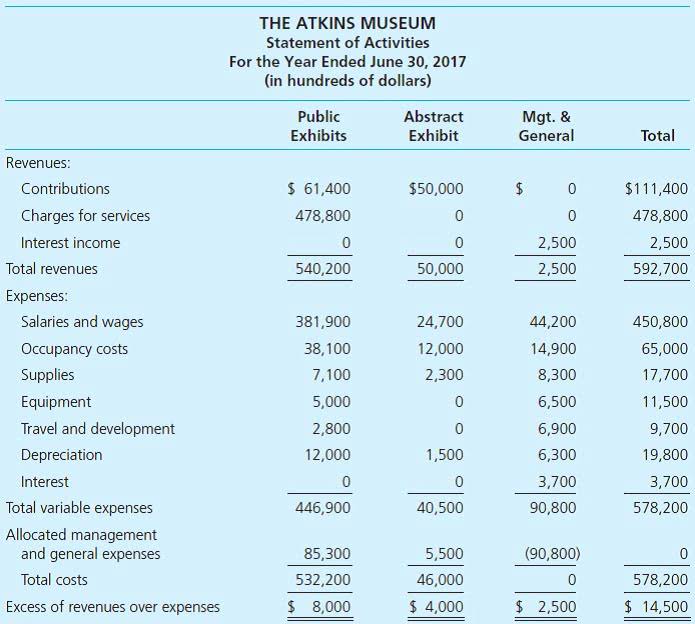
- One of the complexities in dealing with indirect costs is their allocation across various departments or products.
- Today’s cost estimation software solutions help streamline the process of calculating indirect costs, integrating market trends, historical data, and predictive algorithms.
- Some of the worst types of accidents that can occur on construction sites involve cranes.
- Financial accounting is focused on reporting the financial results and financial condition of the entire business entity.
- Examples of tax-deductible direct costs include repairs to your business equipment, such as your production line.
- Specifically, when dealing with indirect costs, periodic assessments are essential to monitoring financial performance.
Small Business Resources
By consistently reviewing indirect costs, firms can discern recurring trends or irregularities. Take, for instance, the cost of responding to requests for proposal (RFPs) consistently runs over budget, or if there are potential savings from bulk purchasing of https://www.bookstime.com/ materials. These reviews become opportunities for operational optimization and to enhance cost-efficiency. Moreover, they offer a chance to compare budgeted vs actual indirect costs, allowing for necessary adjustments to be made to safeguard profit margins.

The integration of sophisticated software tools and data analytics has revolutionized how these costs are handled, leading to increased accuracy and efficiency. Soft costs are expenses that are not directly tied to the labor, materials, and equipment that go into building the structure. They are typically intangible and administrative in nature, often incurred before the construction begins or after it concludes. For example, common soft costs on a project include architectural and design fees, permitting fees, and land acquisition costs.
Estimating and Accounting Software
- Both direct and indirect costs have an effect on your net income, but for very different reasons.
- Taylor Riso is a marketing professional with more than 10 years of experience in the construction industry.
- It is possible to justify the handling of almost any kind of cost as either direct or indirect.
- Indirect costs are costs that are not directly related to a specific cost object like a function, product or department.
- Controllable costs are considered when the decision of taking on the cost is made by one individual.
- This is essential to ensure projects or business operations can continue smoothly even if unexpected costs arise.